Burntide Official Website › Blog › Cost per serving compared
Cost Per Serving: Gummies, Capsules And A Bottle Of Vinegar
- A supermarket bottle of apple cider vinegar delivers more acetic acid per day than any gummy, for pennies.
- Almost nobody keeps taking it, and a trial found the appetite effect of vinegar was mediated by nausea rather than by anything metabolic.
- So the honest comparison is not cost per milligram. It is cost per serving you actually take.
- A gummy at $1.63 to $2.97 a day is paying for adherence, not for dose. That is a real thing to buy and it should be priced as what it is.
A reader asked a reasonable question: why buy a vinegar gummy at all when a litre of apple cider vinegar costs less than a coffee? It deserves a proper answer rather than a defensive one, so here is the arithmetic and then the part the arithmetic misses.
Three formats, three different units
Vinegar reaches buyers in three practical formats and they are not measured in comparable units, which is why most comparisons go wrong in the first paragraph.
- Liquid vinegar is sold by volume and is about 5 percent acetic acid, so a 15 ml tablespoon carries roughly 750 mg of the active and 30 ml carries about 1,500 mg.
- Capsules are sold by count, and the amount inside is frequently not published, or is published as a dried powder weight that is not the same thing as acetic acid content.
- Gummies are sold by count and almost always place the active inside a proprietary blend, so the amount is a ceiling for several ingredients rather than a dose.
Burntide sits in the third category: one blend at 525 mg covering apple cider vinegar and three BHB salts, with no split published. The blend total is real information and the missing split is the real limitation, which a 2023 perspective in the Journal of Nutrition argues is the figure buyers need most (Saldanha 2023).
Liquid vinegar, the cheapest and the hardest
On dose per dollar nothing beats a bottle. A tablespoon a day from a supermarket bottle costs a few cents and delivers more acetic acid than any gummy on the market. If milligrams were the only thing that mattered, this post would end here.
It is also the format the research used. The twelve-week trial that found small reductions in body weight and fat mass used 15 ml or 30 ml of liquid vinegar daily (Kondo 2009), and the insulin sensitivity work dosed vinegar before a high-carbohydrate meal (Johnston 2004). Any claim about vinegar and metabolism traces back to a glass of diluted liquid.
Why people stop
The finding that matters here is the one most articles skip. A 2014 study in the International Journal of Obesity set out to test vinegar's effect on appetite and found the reduction was mediated by nausea rather than by anything metabolic (Darzi 2014). Participants ate less because they felt slightly unwell.
There are two other practical costs. Acidic preparations erode dental enamel in laboratory work (Willershausen 2014), so a daily habit wants a rinse afterwards. And concentrated preparations have caused oesophageal injury when something lodged on the way down, which is why every sensible instruction says to dilute.

Capsules, and the label problem
Capsules solve taste and dental contact at once: no acid in the mouth, nothing to dilute, thirty seconds a day. They introduce a different problem, which is that you usually cannot tell what is in them.
A dried vinegar powder is not acetic acid, and a capsule declaring 500 mg of apple cider vinegar is declaring a powder weight rather than an active content. Published analysis of commercial vinegar tablets found label information unreliable, which is one of the reasons the safety literature on this ingredient exists at all.
Capsules are also where the dose gap becomes hardest to see, because the number on the bottle is large and the active content behind it is not published. A gummy that prints a 525 mg blend total is at least telling you the ceiling.
| Format | What the label usually publishes | What it usually withholds |
|---|---|---|
| Liquid vinegar | Volume, and an acidity percentage | Nothing material. The arithmetic is available to anyone |
| Capsules | A milligram figure for a dried powder | The acetic acid content, which is the active |
| Gummies | A blend total, sometimes, plus sugar and calories | The per-ingredient split, almost always |
| Drinking shots | Volume and a flavour list | How much of the bottle is vinegar rather than juice |
Gummies, and what the sugar costs
Gummies are the highest-adherence format in this category by a wide margin, for the obvious reason: they taste like a sweet and they take four seconds. The cost of that is twofold.
- A smaller dose. There is only so much you can put into 2.5 g of sweetened pectin before it stops being pleasant, and pleasant is the whole point.
- Added sugar. Two grams of total sugars and one gram of added sugar per serving here, which is comfortably inside the 25 to 36 g daily ceiling the American Heart Association suggests, and is still a gram you do not get from a capsule.
The ketone half has the same shape. Studies that moved blood beta-hydroxybutyrate used 10 to 25 g of salts or esters in a single serving (Yu 2023). A gummy cannot carry grams of anything, so what is present is a fraction of a fraction. Nobody should buy a gummy expecting ketosis and this desk says so on every page where the subject comes up.
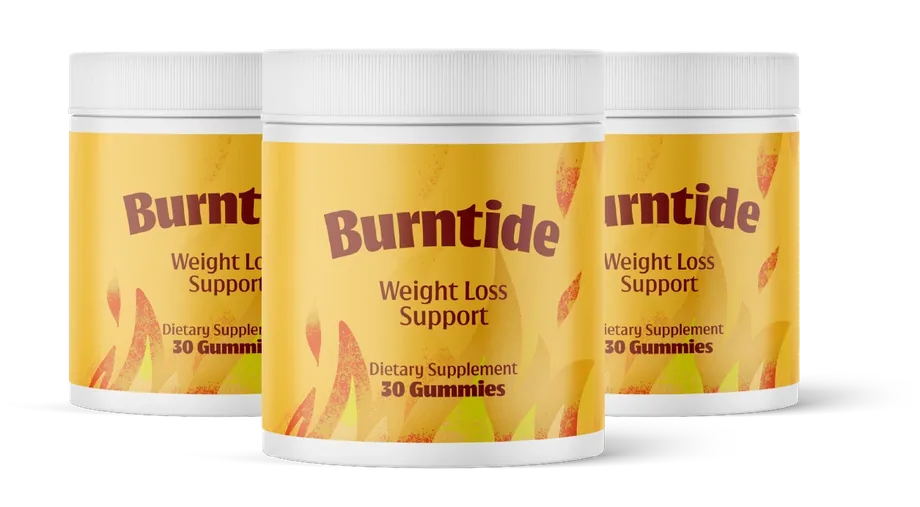
See what a daily gummy actually costs
Three packs, three daily rates, and the cost of testing each one inside the sixty-day window.
$49 to $89 a jar · 60-day guarantee
Order Burntide On The Official WebsiteCost per serving you actually take
Here is the number that reframes the whole comparison. A supplement you abandon costs you its full price and delivers nothing, so the useful unit is not cost per serving. It is cost per serving you actually take.
Nobody publishes completion rates for supplement formats, so this cannot be turned into a precise figure and this post is not going to invent one. What can be said is the direction, and it is not subtle: a chew before breakfast is kept up far longer than a measured tablespoon of diluted vinegar, and the vinegar literature itself reports tolerability as a limiting factor (Darzi 2014).
So the question to ask yourself is not which format is cheapest. It is which format you would still be using in six weeks. If the honest answer for you is the bottle, buy the bottle. It is cheaper, it is closer to the trials, and nothing on this website benefits from pretending otherwise.
What none of these formats gives you
Before the table, one thing worth saying about all three at once, because it is easy to read a comparison like this as though one column is the honest option and the others are compromises.
None of the three gives you a tested product. Liquid vinegar comes closest to the research because it is the thing that was researched, but a supermarket bottle has not been assayed for your batch either, and vinegar strength varies between producers. Capsules mostly do not publish active content. Gummies publish a blend total at best.
None of the three has a trial of the finished product. Every study anybody cites in this category tested an ingredient, in a particular form, at a particular dose, usually in a few dozen people over a few weeks. That is the evidence base, and it is the same evidence base whichever format you buy.
And none of the three does the work on its own. Food, sleep and movement carry most of any metabolic effort, which is what the seller's own third bonus guide is about. A comparison of formats is a comparison of small additions to something else, and pricing it as though one of them is the intervention is the mistake underneath most disappointment in this category.
The comparison in one table
| Format | Active per day | Rough daily cost | Adherence | Other costs |
|---|---|---|---|---|
| Liquid vinegar, 15 ml | About 750 mg acetic acid | Pennies | Low | Taste, dental rinse, dilution, nausea in some trials |
| Liquid vinegar, 30 ml | About 1,500 mg acetic acid | Pennies | Very low | All of the above, more so |
| Capsules | Not published in most products | $0.30 to $1 | Good | Label reliability, and a swallowing risk if not taken with water |
| Burntide, 6-jar pack | Share of 525 mg, not published | $1.63 | High | 1 g added sugar, and no per-ingredient figure |
| Burntide, single jar | Share of 525 mg, not published | $2.97 | High | Same, at the highest daily rate on the ladder |
Read down the second column and the case for liquid vinegar is overwhelming. Read down the fourth and it collapses. Both columns are true, which is why this comparison never resolves into a single winner and why anybody presenting it as one is selling something.
Which one to choose
Four buyers, four answers.
- You want the dose the trials used and you do not mind the taste. Buy a bottle of vinegar, dilute it, drink it before a meal, rinse your mouth. It costs almost nothing and it is the closest thing to the research.
- You have tried that and stopped. This is most people. A gummy at $1.63 to $2.97 a day is buying adherence, and adherence is most of what a daily supplement has going for it.
- You want a published per-ingredient amount. No gummy in this category gives you one, including this one. Buy a product that prints its actives individually, whatever format it comes in.
- You are managing added sugar or dental sensitivity tightly. A capsule format avoids both, at the cost of knowing less about what is inside it.
For what it is worth, this desk sells the second of those four and says so at the top of the about page. The comparison above is the honest version and it points at a supermarket bottle for a meaningful number of readers. The vinegar guide goes through the human trials in full, and the cost page has the daily arithmetic.
Sources cited in this post
- Kondo T, Kishi M, Fushimi T, Ugajin S, Kaga T. Vinegar intake reduces body weight, body fat mass, and serum triglyceride levels in obese Japanese subjects. Biosci Biotechnol Biochem. 2009;73(8):1837-43. PMID 19661687. https://pubmed.ncbi.nlm.nih.gov/19661687/
- Johnston CS, Kim CM, Buller AJ. Vinegar improves insulin sensitivity to a high-carbohydrate meal in subjects with insulin resistance or type 2 diabetes. Diabetes Care. 2004;27(1):281-2. PMID 14694010. https://pubmed.ncbi.nlm.nih.gov/14694010/
- Darzi J, Frost GS, Montaser R, Yap J, Robertson MD. Influence of the tolerability of vinegar as an oral source of short-chain fatty acids on appetite control and food intake. Int J Obes (Lond). 2014;38(5):675-81. PMID 23979220. https://pubmed.ncbi.nlm.nih.gov/23979220/
- Willershausen I, Weyer V, Schulte D, Lampe F, Buhre S, Willershausen B. In vitro study on dental erosion caused by different vinegar varieties using an electron microprobe. Clin Lab. 2014;60(5):783-90. PMID 24839821. https://pubmed.ncbi.nlm.nih.gov/24839821/
- Yu Q, Wang Z, Li Y, et al. Effects of ketone supplements on blood beta-hydroxybutyrate, glucose and insulin: a systematic review and three-level meta-analysis. Complement Ther Clin Pract. 2023;52:101757. PMID 37327753. https://pubmed.ncbi.nlm.nih.gov/37327753/
- Saldanha LG, Dwyer JT, Bailen RA, et al. Perspectives on the use of proprietary blends in dietary supplements. J Nutr. 2023;153(5):1305-9. PMID 37004873. https://pubmed.ncbi.nlm.nih.gov/37004873/
- American Heart Association. Added Sugars. https://www.heart.org/en/healthy-living/healthy-eating/eat-smart/sugar/added-sugars

Every page, every journal post, the bottle facts and the ingredients go through review by Dr. Alexis David, MD before they ship. We write from the Burntide label, the Supplement Facts panel photographed on the jar, the pack ladder the official sales page prints, and the distributor’s own paperwork. Sources are linked inline and every one was opened before it was cited. Where a figure is not disclosed we print “not published” rather than estimating it. Corrections go to [email protected] and move the date at the top of this post.