Burntide Official Website › Choosing a metabolism gummy
How To Choose A Metabolism Gummy: Nine Checks
Nine checks separate a metabolism gummy worth buying from one that is only worth selling: printed per-ingredient amounts, a blend total, an unambiguous serving, visible sugar, structure-function claims only, a refund window longer than the response time, a telephone number and returns address, a traceable lot, and an independent assay. Run them on anything. This page then runs them on Burntide and prints the two it fails.
Written so it works on any product in this category, including the ones this desk does not sell.
The nine checks
Nine questions that work on any product in this category.
This category is crowded and most of it is indistinguishable at a glance. Nine checks are enough to sort it, and none of them requires any chemistry. Read them first, then apply them to whatever you are looking at.
- Every active has a printed amount You cannot compare two products, or a product against a trial, without per-ingredient figures. A blend total is a ceiling, not a dose.
- The blend total is printed if there is a blend If a manufacturer uses a blend, printing its total is the minimum. Plenty of products print a blend with no number at all.
- The serving size and count are unambiguous One a day and thirty to a container makes the maths simple. Two a day halves the supply and doubles the base ingredients.
- Sugar and calories are visible and small A gummy has to be sweet. What matters is whether the amount is disclosed and whether it is small against a daily ceiling.
- Claims stay structure-function Treat, cure, prevent and reverse are drug claims and should not appear on a supplement.
- A money-back window longer than the reported response time If the product takes a month to judge and the window is thirty days, the window is decoration.
- A telephone number and a returns address A supplement sold with neither is telling you how a refund will go.
- A lot code you can match to your order Traceability is what turns a jar into a specific jar from a specific run.
- An independent assay of the batch you are buying The only way to know what is actually in the jar. Independent testing across the gummy category has repeatedly found products outside their declared amounts.
Checks one and nine are the two that most products fail, and they are also the two that matter most, because between them they answer the only question that counts: how much of what is actually in the thing you are about to swallow.
The scorecard, applied to this product
The same nine checks, with the failures printed.
Here is the same list applied to the product this website sells, scored honestly. Two rows come back as a no.
| Check | Why it matters | Result | Detail |
|---|---|---|---|
| 1. Every active has a printed amount | You cannot compare two products, or a product against a trial, without per-ingredient figures. A blend total is a ceiling, not a dose. | No | One 525 mg blend covers apple cider vinegar and three BHB salts. No split is published anywhere. |
| 2. The blend total is printed if there is a blend | If a manufacturer uses a blend, printing its total is the minimum. Plenty of products print a blend with no number at all. | Yes | 525 mg, printed clearly on the panel, with the ingredients listed in descending weight. |
| 3. The serving size and count are unambiguous | One a day and thirty to a container makes the maths simple. Two a day halves the supply and doubles the base ingredients. | Yes | One gummy, 2.5 g, 30 servings a jar. A jar is exactly a month. |
| 4. Sugar and calories are visible and small | A gummy has to be sweet. What matters is whether the amount is disclosed and whether it is small against a daily ceiling. | Yes | 8 calories, 2 g carbohydrate, 2 g total sugars of which 1 g added. Inside the AHA daily ceiling. |
| 5. Claims stay structure-function | Treat, cure, prevent and reverse are drug claims and should not appear on a supplement. | Yes | Five printed claims, all structure-function, with the FDA disclaimer boxed on the back. |
| 6. A money-back window longer than the reported response time | If the product takes a month to judge and the window is thirty days, the window is decoration. | Yes | 60 days from purchase, against a reported wait of three to four weeks. Comfortably longer. |
| 7. A telephone number and a returns address | A supplement sold with neither is telling you how a refund will go. | Yes | +1 (877) 257-0825 and a New York returns address, printed on every page here. |
| 8. A lot code you can match to your order | Traceability is what turns a jar into a specific jar from a specific run. | Yes | Lot BUR-26/BU-4642 on the base of the jar, matchable by the order desk. |
| 9. An independent assay of the batch you are buying | The only way to know what is actually in the jar. Independent testing across the gummy category has repeatedly found products outside their declared amounts. | No | No certificate has been supplied. BUR-4642-26-BU is a traceability reference, not a lab result. |
Score: 7 out of 9. The two failures are the two most important ones on the list.
What that means in practice. You can verify the format, the serving, the sugar, the claims ceiling, the window, the contact route and the lot code yourself in five minutes. You cannot verify how much apple cider vinegar or how much beta-hydroxybutyrate is in a gummy, and neither can this desk, because nobody has published it and nobody has assayed the batch.
A scorecard that came back nine out of nine would be worthless, and a page that printed one would tell you more about the page than the product. Two failures, named, is what makes the other seven worth reading.
Why the proprietary blend check comes first
What a blend total is, and what it conceals.
Check one deserves its own section because it is the one the whole category leans on. A proprietary blend lets a manufacturer print a total and withhold the split, and United States labelling rules permit it.
There are defensible reasons to use one: a genuinely novel formulation a competitor could copy from the panel. There are also convenient ones: a blend hides how little of the expensive ingredient is present, and it makes any comparison against a published trial impossible. A 2023 perspective in the Journal of Nutrition sets out the argument for disclosure and it is the clearest thing written on the subject (Saldanha 2023).
| What a blend total tells you | What it does not |
|---|---|
| The maximum any single ingredient can be | How much of any one of them is present |
| The order by weight, if the list is ordered | The ratio between first and last |
| That the manufacturer measured something | Whether the amount resembles any trial dose |
| A number you can compare against a research dose as a ceiling | A number you can compare against another product's blend |
The practical rule: treat a blend total as an upper bound on every ingredient in it, and assume the cheapest ingredient is the largest share unless the manufacturer says otherwise. That is not cynical, it is what the ordering convention on a panel implies when nothing else is published.
Why the assay check almost always fails
What independent testing has found in this format.
Check nine is the one nobody in this category passes often, and it is worth knowing why it matters rather than treating it as a formality.
A JAMA research letter analysed melatonin gummies sold in the United States and found most products outside their declared quantities, some by a wide margin (Cohen 2023). That is a study about a different ingredient in the same format, and the format is the point: gummies are harder to dose consistently than capsules, because the active has to survive being cooked into a sugar matrix.
What a real assay would have to show. The laboratory's name and accreditation, the lot tested, the date, the method, and the actual figures including any that are unflattering. A certificate reference printed on a website is not any of those things, and this website says so on the batch page.
If an independent assay for lot BUR-26/BU-4642 is ever supplied to this desk it will be published with all five of those, and this scorecard will change to eight out of nine.
Three checks that matter less than they look
Ingredient count, the emblem wall and a self-published star rating.
Three checks people apply that are worth less than they look, so you can stop spending attention on them.
Counting the ingredient list
Twenty names at doses too small to do anything is worse than four at doses that are published. Length is a marketing decision, not a quality signal. This product has four actives and no published amounts, which is half of the right answer.
The emblem wall
GMP, FDA-registered facility, GMO free, natural: all sourcing or procedure claims, none an approval. They tell you about a building and a supply chain rather than about a formula. Useful, but not what you think.
Star ratings on the seller's own page
An aggregate the seller publishes and nobody can audit. The specific detail under it is worth far more: who wrote, when, which pack, and what the recurring criticism is.
One more that is worth something, and gets ignored: whether the seller publishes the criticism. A page with only five-star reviews has either a very unusual product or an editorial policy, and in this category it is nearly always the second.
After the nine checks, the price question
Five rules that apply to any product in this category.
Once a product passes or fails the nine, the remaining question is commercial, and it has a formula.
- Work out the cost per day, not the cost per container. Divide the total by the days it covers at the label serving.
- Compare that against the refund window, not against the container. If the window is sixty days, sixty days of product is what you can actually test.
- Price the offer without the bonuses. If it only works with $141 of PDFs attached, it does not work.
- Ignore the struck-through figure. It is a list price the seller chose. Judge what leaves your account.
- Buy the smallest pack first unless you already know the product suits you.
Applied here, that produces one jar at $89 for a first-time buyer and six jars at $294 for somebody on their second order. The cost page shows the arithmetic and a longer blog piece works through what a fair price in this category looks like.
The research behind this Burntide page
Every source below was opened and checked. None of them studied Burntide itself; they concern the ingredients, at the amounts the researchers used.
- Saldanha LG, Dwyer JT, Bailen RA, et al. Perspectives on the use of proprietary blends in dietary supplements. J Nutr. 2023;153(5):1305-9. PMID 37004873. https://pubmed.ncbi.nlm.nih.gov/37004873/
- Cohen PA, Avula B, Wang YH, Katragunta K, Khan I. Quantity of melatonin and CBD in melatonin gummies sold in the US. JAMA. 2023;329(16):1401-2. PMID 37097362. https://pubmed.ncbi.nlm.nih.gov/37097362/
- U.S. Food and Drug Administration. Dietary Supplement Labeling Guide. https://www.fda.gov/food/dietary-supplements-guidance-documents-regulatory-information/dietary-supplement-labeling-guide
- U.S. Food and Drug Administration. Questions and Answers on Dietary Supplements. https://www.fda.gov/food/information-consumers-using-dietary-supplements/questions-and-answers-dietary-supplements
- Federal Trade Commission. Health Products Compliance Guidance. December 2022. https://www.ftc.gov/business-guidance/resources/health-products-compliance-guidance
- Federal Trade Commission. Online Advertising and Marketing. https://www.ftc.gov/business-guidance/advertising-marketing/online-advertising-marketing
- National Institutes of Health, Office of Dietary Supplements. Dietary Supplements for Weight Loss: Fact Sheet for Health Professionals. https://ods.od.nih.gov/factsheets/WeightLoss-HealthProfessional/
- National Center for Complementary and Integrative Health. Dietary and Herbal Supplements. https://www.nccih.nih.gov/health/dietary-and-herbal-supplements
- Kondo T, Kishi M, Fushimi T, Ugajin S, Kaga T. Vinegar intake reduces body weight, body fat mass, and serum triglyceride levels in obese Japanese subjects. Biosci Biotechnol Biochem. 2009;73(8):1837-43. PMID 19661687. https://pubmed.ncbi.nlm.nih.gov/19661687/
- Yu Q, Wang Z, Li Y, et al. Effects of ketone supplements on blood beta-hydroxybutyrate, glucose and insulin: a systematic review and three-level meta-analysis. Complement Ther Clin Pract. 2023;52:101757. PMID 37327753. https://pubmed.ncbi.nlm.nih.gov/37327753/

Every page, every journal post, the bottle facts and the ingredients go through review by Dr. Alexis David, MD before they ship. We write these pages from the Burntide label, the Supplement Facts panel photographed on the jar, the pack ladder the official sales page prints, and the distributor’s own paperwork. We cite public research for apple cider vinegar and beta-hydroxybutyrate, and we print “not published” wherever the label withholds a figure rather than estimating it. Where the seller’s own price page claims more than it supports, we say so on the page. Corrections are made on the page itself and the review date moves forward. Write to [email protected]. Last reviewed September 2026 by Dr. Alexis David, MD.
More Burntide pages worth your time
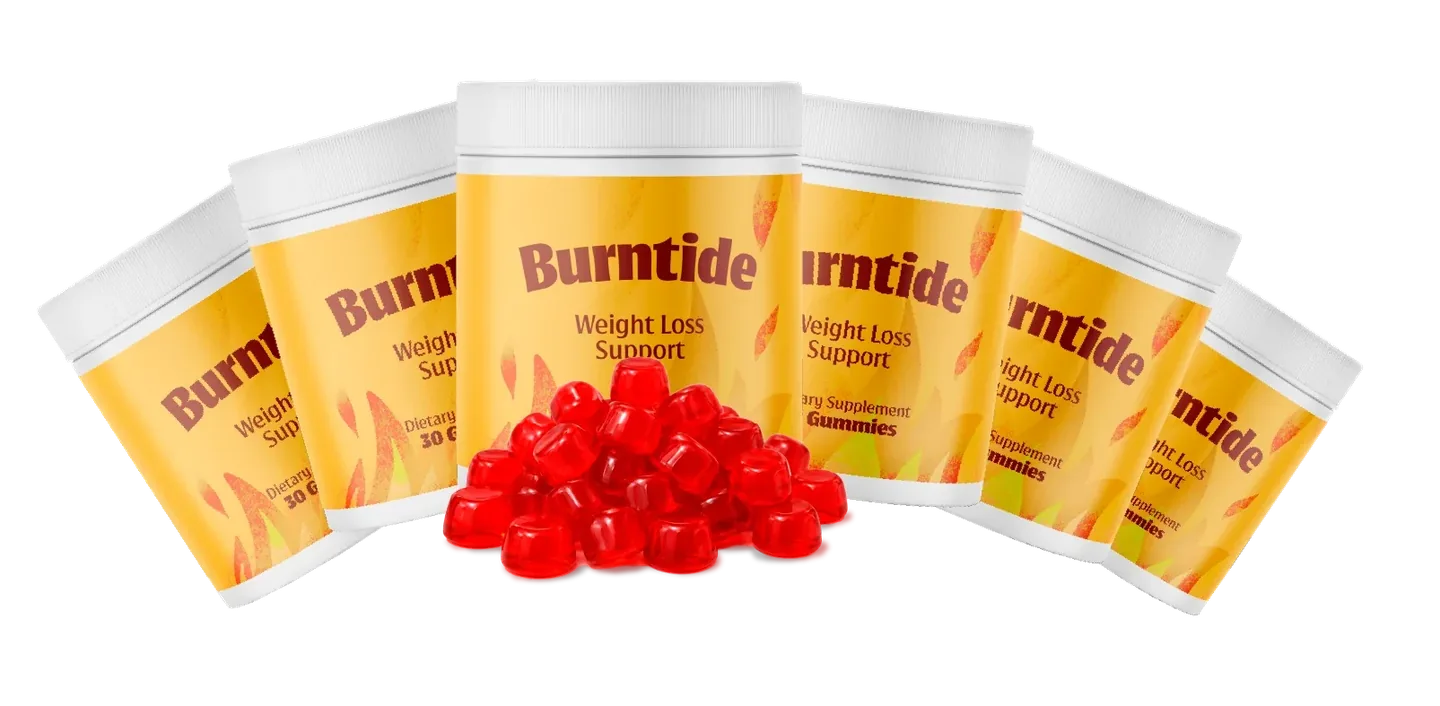
Order Burntide with the scorecard in front of you
Seven of nine checks passed, two failed and named. If that is acceptable, the single jar is where to start.
$49 to $89 a jar · $1.63 to $2.97 a day
Order Burntide On The Official WebsiteOne gummy a day · 30 per jar · 60-day money-back guarantee · lot BUR-26/BU-4642