Burntide Official Website › Apple cider vinegar guide
Apple Cider Vinegar: What The Trials Actually Measured
The human evidence for apple cider vinegar is real, small and specific. Twelve weeks of 15 to 30 ml a day produced modest reductions in body weight and fat mass in one controlled trial. Vinegar before a carbohydrate meal improves insulin sensitivity in some people. Every finding used liquid vinegar at tablespoon doses, which is the number to carry into any decision about a capsule or a gummy.
Four human trials, two safety papers, and the dose that runs through all of them.
What vinegar is, in numbers
Two tablespoon figures that run through every trial.
Vinegar is dilute acetic acid, made by fermenting apple cider twice: sugar to alcohol, then alcohol to acid. Household vinegar is typically around 5 percent acetic acid, so a 15 ml tablespoon carries roughly 750 mg of it and 30 ml carries about 1,500 mg.
Those two numbers are the spine of this guide. Nearly every human trial worth citing used one or the other, and any product sold in a different format has to be measured against them rather than against its own marketing.
| Amount | Acetic acid, roughly | Where it appears |
|---|---|---|
| 15 ml, one tablespoon | About 750 mg | The lower arm of the twelve-week trial |
| 30 ml, two tablespoons | About 1,500 mg | The higher arm of the same trial |
| 20 g of vinegar with a meal | About 1,000 mg | The insulin sensitivity studies |
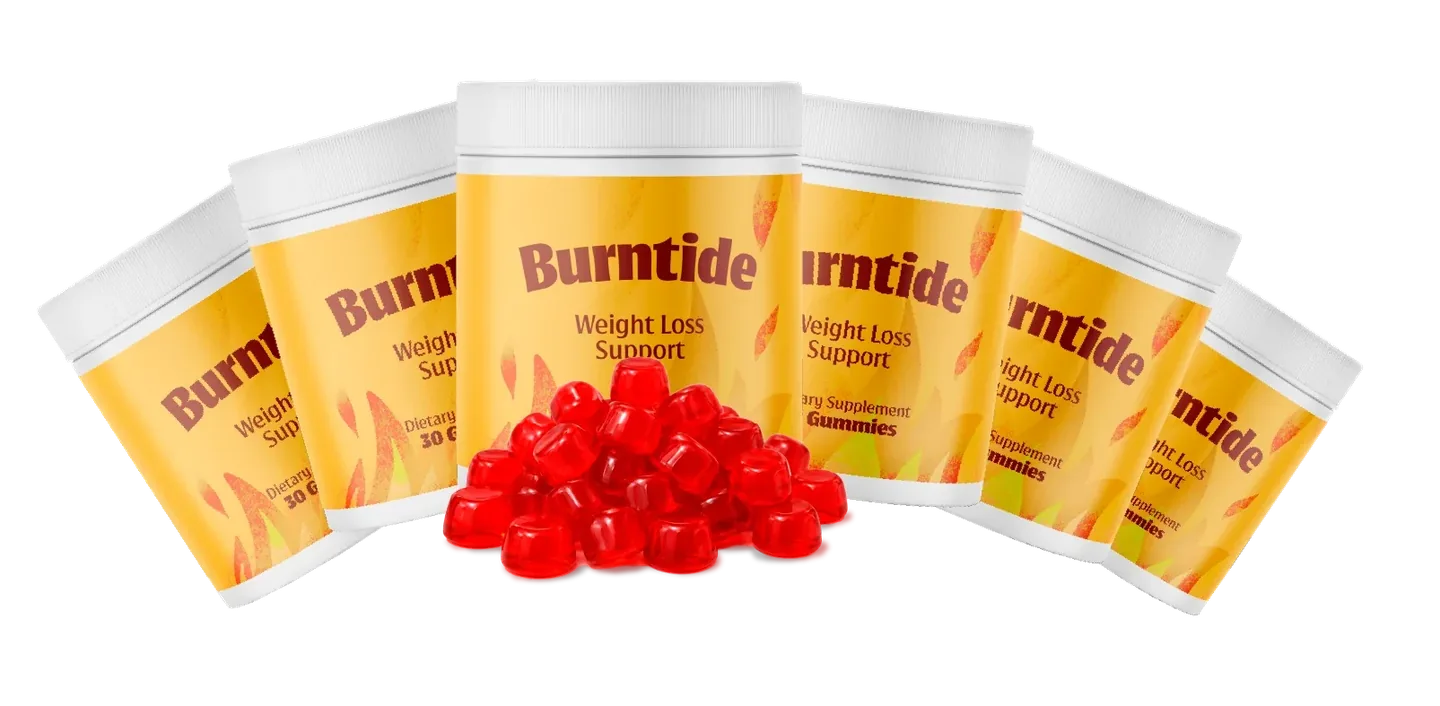
| A 525 mg proprietary blend | Less than 525 mg, shared four ways | What a Burntide gummy can hold in total |
The four trials that carry the weight
What each one did, and what it found.
Four human studies carry most of the weight. Here is what each one did.
Kondo 2009, twelve weeks, 175 adults
Obese Japanese adults took 15 ml or 30 ml of vinegar daily for twelve weeks against a placebo drink. Both vinegar groups showed small reductions in body weight, body mass index, visceral fat and serum triglycerides. The effects were modest and they reversed after the intervention stopped (Kondo 2009).
Johnston 2004, a single meal
Vinegar taken before a high-carbohydrate meal improved insulin sensitivity in participants with insulin resistance or type 2 diabetes. The effect is on the meal that follows, which is why timing matters (Johnston 2004).
Hadi 2021, a meta-analysis
A systematic review and meta-analysis pooled randomised trials on lipids and glucose and found significant but modest effects, clearest in people with type 2 diabetes (Hadi 2021).
Castagna 2025, body composition
A more recent review looking specifically at body composition in people with type 2 diabetes or overweight reached similarly cautious conclusions (Castagna 2025).
The honest summary of all four: vinegar does something measurable to post-meal glucose, and over months it is associated with small changes in weight and lipids at tablespoon doses. It is not a weight-loss treatment and none of these authors describes it as one.
The tolerability problem, which is the interesting part
The trial that found appetite loss was mediated by nausea.
The finding most write-ups leave out is the one about whether people can actually take it. A 2014 study in the International Journal of Obesity set out to test vinegar's effect on appetite and found that the appetite reduction it produced was mediated by nausea rather than by anything metabolic (Darzi 2014).
Why that matters more than it sounds. If a product suppresses appetite by making you feel slightly unwell, it will work in a laboratory and fail in a kitchen, because nobody keeps doing it. Tolerability is the practical ceiling on liquid vinegar, and it is the strongest argument any gummy in this category has: a format people keep using beats a format that works better and gets abandoned in week two.
It is also the argument's limit. A gummy solves adherence by carrying much less acetic acid. Solving the tolerability problem by removing most of the dose is a real trade, and a page that presents a gummy as liquid vinegar in a nicer wrapper is not describing that trade.
What the safety literature says
Two published cases, one interaction and one gap.
Vinegar preparations have a small safety literature and it is worth knowing before anybody starts taking concentrated versions.
- Oesophageal injury from tablets. A case published in the Journal of the American Dietetic Association describes injury after an apple cider vinegar tablet lodged in the throat, and the authors then analysed commercial products and found the labels unreliable (Hill 2005). That is why the Burntide label says to take it with a full glass of water.
- Dental erosion. Laboratory work using an electron microprobe found measurable enamel erosion from different vinegar varieties (Willershausen 2014). Anything acidic that spends time in the mouth is worth rinsing after, and a chewed gummy spends longer there than a swallowed capsule.
- Glucose-lowering medication. Vinegar's post-meal glucose effect is the same mechanism several medications use. That is a pharmacist conversation, not a reason to avoid it.
- Potassium and long-term high intake. Reports exist at the level of case studies rather than trials. Nobody is describing a tablespoon a day as dangerous, and nobody has studied very high long-term intake properly either.
General guidance on supplement safety is published by NCCIH and MedlinePlus.
Four formats, one trade
What each format gives you and what it costs.
Vinegar reaches buyers in four formats and the trade is the same every time: dose against the likelihood you keep taking it.
| Format | Typical acetic acid | Adherence | The honest verdict |
|---|---|---|---|
| Liquid vinegar, diluted | 750 to 1,500 mg a day | Poor. Taste and tolerability | Closest to the trials, and hardest to keep up |
| Capsules | Usually undisclosed | Good | Label accuracy has been a documented problem in this format |
| Gummies | Usually inside a blend | Best | Easiest to keep, smallest dose, and carries added sugar |
| Drinking shots | Varies widely | Moderate | Often mostly juice, with the vinegar a minor ingredient |
There is no format that gives you trial doses and good adherence at once. Anyone who tells you otherwise is selling one of the four. The useful question is which trade suits you, and it is the question the buying guide is built around.
The bottom line, in one paragraph
One comparison that settles most of the argument.
If you take one thing from this guide, make it the arithmetic.
A tablespoon of ordinary vinegar carries more acetic acid than the entire 525 mg proprietary blend in a Burntide gummy, and that blend also has to cover three BHB salts. The gummy is not a concentrated version of the trials. It is a much smaller amount in a format you will actually keep taking, which is a real thing to be worth and a different thing from what the research measured.
That is the whole of the honest case for a vinegar gummy, and it is the case the ingredients page makes with the table attached. Whether $1.63 to $2.97 a day is worth paying for it is a question about your own routine rather than about the biochemistry, and the cost page lays out the numbers.
The research behind this Burntide page
Every source below was opened and checked. None of them studied Burntide itself; they concern the ingredients, at the amounts the researchers used.
- Kondo T, Kishi M, Fushimi T, Ugajin S, Kaga T. Vinegar intake reduces body weight, body fat mass, and serum triglyceride levels in obese Japanese subjects. Biosci Biotechnol Biochem. 2009;73(8):1837-43. PMID 19661687. https://pubmed.ncbi.nlm.nih.gov/19661687/
- Johnston CS, Kim CM, Buller AJ. Vinegar improves insulin sensitivity to a high-carbohydrate meal in subjects with insulin resistance or type 2 diabetes. Diabetes Care. 2004;27(1):281-2. PMID 14694010. https://pubmed.ncbi.nlm.nih.gov/14694010/
- Hadi A, Pourmasoumi M, Najafgholizadeh A, Clark CCT, Esmaillzadeh A. The effect of apple cider vinegar on lipid profiles and glycemic parameters: a systematic review and meta-analysis of randomized clinical trials. BMC Complement Med Ther. 2021;21(1):179. PMID 34187442. https://pubmed.ncbi.nlm.nih.gov/34187442/
- Castagna A, et al. Effect of apple cider vinegar intake on body composition in humans with type 2 diabetes and/or overweight or obesity. Nutrients. 2025;17(18):2986. PMID 41010525. https://pubmed.ncbi.nlm.nih.gov/41010525/
- Darzi J, Frost GS, Montaser R, Yap J, Robertson MD. Influence of the tolerability of vinegar as an oral source of short-chain fatty acids on appetite control and food intake. Int J Obes (Lond). 2014;38(5):675-81. PMID 23979220. https://pubmed.ncbi.nlm.nih.gov/23979220/
- Hill LL, Woodruff LH, Foote JC, Barreto-Alcoba M. Esophageal injury by apple cider vinegar tablets and subsequent evaluation of products. J Am Diet Assoc. 2005;105(7):1141-4. PMID 15983536. https://pubmed.ncbi.nlm.nih.gov/15983536/
- Willershausen I, Weyer V, Schulte D, Lampe F, Buhre S, Willershausen B. In vitro study on dental erosion caused by different vinegar varieties using an electron microprobe. Clin Lab. 2014;60(5):783-90. PMID 24839821. https://pubmed.ncbi.nlm.nih.gov/24839821/
- National Center for Complementary and Integrative Health. Dietary and Herbal Supplements. https://www.nccih.nih.gov/health/dietary-and-herbal-supplements
- MedlinePlus, U.S. National Library of Medicine. Dietary Supplements. https://medlineplus.gov/dietarysupplements.html
- National Institutes of Health, Office of Dietary Supplements. Dietary Supplements for Weight Loss: Fact Sheet for Health Professionals. https://ods.od.nih.gov/factsheets/WeightLoss-HealthProfessional/

Every page, every journal post, the bottle facts and the ingredients go through review by Dr. Alexis David, MD before they ship. We write these pages from the Burntide label, the Supplement Facts panel photographed on the jar, the pack ladder the official sales page prints, and the distributor’s own paperwork. We cite public research for apple cider vinegar and beta-hydroxybutyrate, and we print “not published” wherever the label withholds a figure rather than estimating it. Where the seller’s own price page claims more than it supports, we say so on the page. Corrections are made on the page itself and the review date moves forward. Write to [email protected]. Last reviewed September 2026 by Dr. Alexis David, MD.
Try Burntide for one month
A smaller dose in a format people keep taking. One jar is thirty days and the window is sixty.
$49 to $89 a jar · $1.63 to $2.97 a day
Order Burntide On The Official WebsiteOne gummy a day · 30 per jar · 60-day money-back guarantee · lot BUR-26/BU-4642