Burntide Official Website › Blog › Reading a supplement price page
Was Prices And Free Bonuses: Reading A Supplement Price Page
- A struck-through price is a list price the seller chose. It is not evidence the product recently sold at that figure.
- A stated bonus value is the seller's number for something nobody else sells, so there is no market price to check it against.
- Best value flags, most-popular statistics and countdown urgency are layout, not information.
- Price the offer without any of it. If it only works with the extras attached, it does not work.
Supplement price pages are built from about eight reusable parts and once you can name them you can read any of them in two minutes. This post names them using the page that sells Burntide, because that is the one this website is attached to and it would be dishonest to illustrate the point with somebody else's.
The anatomy of a supplement price page
Nearly every direct-to-consumer supplement ladder has these parts, usually in this order.
- Three tiers, with the middle one visually enlarged.
- A per-unit price shown larger than the total.
- A struck-through comparison price and a stated saving.
- A best value or most popular ribbon on one tier.
- A feature list with ticks, and sometimes crosses.
- Bonus items with individual stated values.
- A guarantee seal.
- Urgency copy, and often a graphic drawing the eye to the button.
None of those is dishonest in itself. Several are genuinely informative. What matters is knowing which parts carry information and which parts carry emphasis, because they look identical at a glance.
| Part of the page | Information or emphasis? | What to do with it |
|---|---|---|
| Total price | Information | This is the number that leaves your account |
| Per-unit price | Information | Useful, but convert it to cost per day |
| Struck-through price | Emphasis | Ignore unless the seller says when it sold at that |
| Stated saving | Emphasis | Arithmetic on a number the seller chose |
| Best value ribbon | Emphasis | A design decision, not a calculation |
| Tick and cross list | Information | Read this one carefully |
| Bonus values | Emphasis | No market price exists to check them |
| Guarantee length | Information | Compare it to the reported response time |
Struck-through prices
On the Burntide ladder the single jar shows $99 struck through and $89 payable, a $10 saving. The three-jar row shows $447 and $177, a $270 saving. The six-jar row shows $894 and $294, a $600 saving.
Work backwards and the three-jar figure implies a list price of $149 a jar, and so does the six-jar figure. The single-jar row implies $99. The same jar therefore carries two different list prices on the same page, and the page does not explain why.
That is the tell. A comparison price should be a price the product was genuinely offered at, and the Federal Trade Commission's guidance on advertising sets out that a seller has to be able to substantiate what it puts in front of a buyer (the FTC on online advertising). Where two different list prices appear for one item, the honest reading is that both are notional.
What to do instead
- Cover the struck-through figure with your thumb.
- Read the payable total.
- Divide it by the days it covers.
- Ask whether that daily figure is worth it on its own.
If the answer is yes, the saving was irrelevant. If the answer is no, the saving was doing the persuading, which is exactly what it is there for.
Stated bonus values
Three digital guides ship with the six-jar pack, valued by the seller at $47, $57 and $37: $141 in total. They are real PDFs and at least one of them is genuinely useful. Nobody else sells them, so there is no market price to test $141 against.
The right way to handle a stated bonus value is not to dismiss it and not to add it to the pile. It is to price the offer without it:
- Six jars at $294 buys 180 days at $1.63 a day, with free US shipping.
- Three jars at $177 buys 90 days at $1.97 a day, plus shipping.
- The difference is $117 for 90 more days, the postage, and three PDFs.
Put that way it is a concrete question with a clear answer, and the $141 never enters it. That is the test: if the offer needs the bonus valuation to make sense, the offer does not make sense.
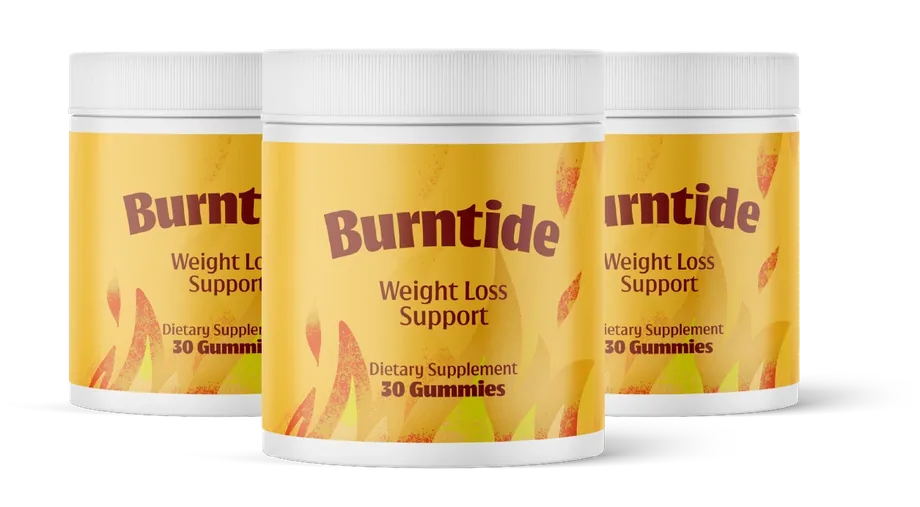
Read the Burntide ladder with the emphasis stripped out
The three packs, the cost per day, and a plain explanation of what the struck-through figures compare against.
$49 to $89 a jar · 60-day guarantee
Order Burntide On The Official WebsiteBest value flags and popularity statistics
A ribbon reading BEST VALUE is a design decision. Sometimes it is also true. On this ladder it happens to sit on the row with the genuinely lowest cost per day, so it is accurate, and it would look exactly the same if it were not.
Popularity statistics are a different matter. The Burntide sales page states that 94 percent of customers choose the six-bottle pack. Nobody outside the seller can verify a figure like that, and this website does not repeat it as fact anywhere. What we do publish is that five of the eight named reviewers bought six jars, which is a smaller, checkable claim about a published set.
The general rule: a statistic a seller publishes about its own customers is a marketing asset. Treat it the way you would treat a review that only the seller can see.
Urgency, and the hand pointing at the button
Two devices do most of the pushing on a page like this, and both are visual rather than verbal.

The other is the phrase available only while supplies last, which appears above the ladder. We have never seen this product listed as unavailable. Scarcity copy of that kind is standard across the category and it is worth recognising rather than reacting to.
Neither device is a reason to distrust a product. They are a reason to slow down for thirty seconds, which is all any of this post is really asking for.
The ticks and crosses nobody reads
Here is the part of a supplement price page that carries the most information per square inch and gets the least attention. The feature list under each tier.
On the Burntide ladder, all three tiers print the same four lines: bonuses, free US shipping, the guarantee, and the supply. On the six-jar row all four carry a tick. On the one-jar and three-jar rows, the bonus line and the free-shipping line carry a cross. The lines are still printed, in the same typeface, in the same position.
| Line | 1 jar | 3 jars | 6 jars |
|---|---|---|---|
| Bonus guides | Cross | Cross | Tick |
| Free US shipping | Cross | Cross | Tick |
| 60-day guarantee | Tick | Tick | Tick |
| Biggest discount | Not shown | Not shown | Tick |
That table is the single most useful thing on this post. It is not hidden and it is not deceptive; it is simply easy to skim past, because a list of four lines with small icons reads as four features whichever icon is attached. Read the icons.

Three things a price page does well
A post that only catalogues persuasion techniques ends up implying the whole format is a trick, which is not true and is not useful. Three parts of a well-built price ladder carry real information and are worth reading closely rather than skipping.
- The supply figure. A tier that prints 30-day supply, 90-day supply and 180-day supply is doing you a favour. It turns a count of containers into a length of time, which is the only way to compare against a refund window or a competitor.
- The per-unit price. Showing $49 a jar alongside $294 makes the shape of the discount legible. It is the second-best number on the page after cost per day, and cost per day is one division away from it.
- The guarantee length. A window printed on the tier rather than buried in a policy page is a real commitment made in public, and its length can be compared against the reported response time for the product. Sixty days against a three to four week wait is a usable window. Thirty would not be.
Those three, plus the tick and cross list above, are four parts out of eight that genuinely help. That is a better ratio than most retail pages of any kind manage, and it is worth saying before the method below.
A four-step method
Next time you are on any supplement price page, do this.
- Cover the struck-through figures. Read only what you pay.
- Convert every tier to cost per day. Total divided by servings at the label dose.
- Read the icons in the feature list. Ticks and crosses, line by line.
- Compare the supply to the refund window. Everything past the window is a bet.
Two minutes, four steps, and it works on any product in this category. It also works on this one, which is why our own pricing page prints the crosses, the two different list prices and the cost per day rather than leaving you to find them.
If you want to calibrate how much scepticism this category has earned, the FDA publishes a running list of weight-loss products found to contain undeclared drug ingredients (the FDA's weight-loss product notifications), and independent assays of gummy supplements have found products outside their declared quantities (Cohen 2023). Neither concerns Burntide, and both are the context every price page in this category sits in.
Sources cited in this post
- Federal Trade Commission. Online Advertising and Marketing. https://www.ftc.gov/business-guidance/advertising-marketing/online-advertising-marketing
- Federal Trade Commission. Health Products Compliance Guidance. December 2022. https://www.ftc.gov/business-guidance/resources/health-products-compliance-guidance
- U.S. Food and Drug Administration. Weight Loss Product Notifications. https://www.fda.gov/drugs/medication-health-fraud-notifications/weight-loss-product-notifications
- National Institutes of Health, Office of Dietary Supplements. Dietary Supplements for Weight Loss: Fact Sheet for Health Professionals. https://ods.od.nih.gov/factsheets/WeightLoss-HealthProfessional/
- Cohen PA, Avula B, Wang YH, Katragunta K, Khan I. Quantity of melatonin and CBD in melatonin gummies sold in the US. JAMA. 2023;329(16):1401-2. PMID 37097362. https://pubmed.ncbi.nlm.nih.gov/37097362/

Every page, every journal post, the bottle facts and the ingredients go through review by Dr. Alexis David, MD before they ship. We write from the Burntide label, the Supplement Facts panel photographed on the jar, the pack ladder the official sales page prints, and the distributor’s own paperwork. Sources are linked inline and every one was opened before it was cited. Where a figure is not disclosed we print “not published” rather than estimating it. Corrections go to [email protected] and move the date at the top of this post.