Burntide Official Website › Blog › Journal logos on a sales page
PubMed And Journal Logos On A Sales Page: What They Mean
- PubMed is a free index of published literature. It certifies nothing and lists no products.
- A journal logo travels with one citation. The journal has no view on the product beside it.
- Check three things in any citation block: does the paper exist, is it about the ingredient, and was the dose anything like what is in the jar.
- On this product, two of the six cited papers are about subjects other than its ingredients, and every ingredient study used far larger doses.
This is the post on this website that costs the product it sells the most, and it is here because the alternative is letting a reader work it out on their own and wonder what else was not mentioned.
Two logos in one asset pack
The official asset pack for Burntide contains thirty-five images. Thirty-three are product photographs, label artwork, emblems and lifestyle shots. Two are the wordmarks of organisations with no connection to the product: the PubMed wordmark and the New England Journal of Medicine wordmark.


The sales page does print a disclosure beneath its reference list: the product is not endorsed by, sponsored by or affiliated with any of the organisations named. That is the correct thing to print and it is to the seller's credit. A logo still does work that a sentence underneath it does not undo, which is why this post exists.
What PubMed actually is
PubMed is a search index. The US National Library of Medicine runs it, it is free, and it covers more than thirty million citations from biomedical journals. Anybody can search it. That is the whole of what it does.
- It indexes papers from journals that meet its selection criteria.
- It does not peer review anything. The journals do that, with varying rigour.
- It does not evaluate, approve or rank products of any kind.
- Appearing in a PubMed search means a paper exists. It says nothing about whether the paper is good, large, replicated or relevant.
Which means a PubMed logo on a sales page carries exactly one piece of information: the seller has found some published literature about something. That is a very low bar, and it is cleared by almost every ingredient anyone has ever put in a jar.
What a journal logo means
The New England Journal of Medicine mark travels with one reference on the sales page: Lynch and Pedersen 2016, a review of the human intestinal microbiome in health and disease. It is a real paper, it is a good one, and it was published in that journal in 2016.
It is also about the gut microbiome, which is not an ingredient in Burntide and is not mentioned on the label. The paper does not discuss apple cider vinegar, beta-hydroxybutyrate, gummies or this product. The journal has no position on any of them.
None of that is unusual and none of it is unique to this seller. Reference lists on supplement sales pages routinely mix papers directly about an ingredient with papers about the general biology of the area, and the second kind is there to establish that the subject is serious rather than to support a claim.
| Citation on the sales page | Is it about an ingredient in the jar? | What it is |
|---|---|---|
| Kondo 2009, vinegar and body weight | Yes | A twelve-week trial using 15 to 30 ml of liquid vinegar |
| Newman and Verdin 2017, BHB signalling | Yes | A review of what beta-hydroxybutyrate does as a molecule |
| Cox 2016, nutritional ketosis in athletes | Partly | A ketone ester study in trained athletes, not a supplement trial |
| Westman 2008, ketogenic diet | No | A dietary intervention, not a supplement |
| Lynch and Pedersen 2016, gut microbiome | No | A review of the microbiome in health and disease |
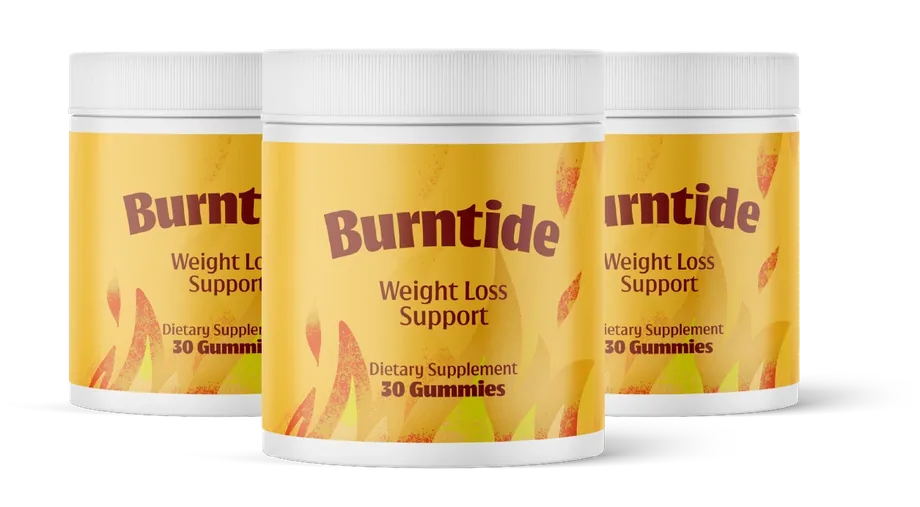
See the Burntide citations with their doses attached
Every study this website cites, with what it actually measured and at what amount.
$49 to $89 a jar · 60-day guarantee
Order Burntide On The Official WebsiteThree checks on any citation block
Three questions handle almost every supplement reference list you will ever meet, and they take about two minutes.
- Does the paper exist and is it the paper claimed? Paste the identifier into PubMed. On a previous build of this site, two identifiers written from memory turned out to be a urology review and a thoracic surgery paper, and only checking caught it.
- Is it about an ingredient in this product? Read the title. If it is about a diet, a disease area or a general biological mechanism, it is context rather than support.
- What dose did it use? This is the one that decides everything, and it is almost never on the sales page.
Every PubMed identifier cited on this website was confirmed against the NCBI summary service before it was written down, and that is a two-line check anybody can run:
eutils.ncbi.nlm.nih.gov/entrez/eutils/esummary.fcgi?db=pubmed&retmode=json&id=19661687 returns the title, journal, year and first author for that identifier. Swap the number for whichever one you are checking.
The check, applied to this product
Running the three checks across the sales page reference list produces this.
- All of the papers exist. Every identifier resolves to the paper named. That is worth saying plainly, because it is not true of every page in this category.
- Three of five are about ingredients in the jar, or about the general biology of one of them (Kondo 2009, Newman and Verdin 2017, Cox 2016).
- Two of five are about something else: a ketogenic diet study and a gut microbiome review.
- None of them used anything like the amount in a gummy. Not one.
So the reference list is honest about the papers and silent about the doses, which is the normal shape of this problem. The papers are not fabricated. They simply do not say what a reader is being invited to infer.
When a citation block is genuinely good
It would be easy to finish this post having taught nothing except suspicion, so here is the opposite: what a reference list looks like when a seller has done it properly.
- Every citation is about an ingredient that is actually in the product, and the ones that are not are labelled as background rather than mixed in.
- The dose used appears beside the finding, in the sentence, not in a footnote. This is the single strongest signal of good faith available, because it is the thing a seller has most reason to leave out.
- The study type is named. A randomised controlled trial, a meta-analysis and a mechanistic review carry very different weight, and a list that flattens them into "research shows" is doing that deliberately.
- Negative or null findings appear. Any ingredient with a real literature has some. A list of nothing but supportive results has been curated.
- Links open to the record, not to a summary the seller wrote.
Judged against those five, the sales page for this product manages two: the papers exist and the identifiers resolve. It does not print doses, does not distinguish study types, and includes no null results. That is a normal score for the category and it is why the dose table below is on this website rather than that one.
The dose question, which is the real one
Everything above is preamble to this. Burntide declares one proprietary blend of 525 mg covering apple cider vinegar and three BHB salts, with no split published. Here is that number beside what the cited research used.
| What the research used | What the jar can hold | Ratio |
|---|---|---|
| 15 to 30 ml liquid vinegar, about 750 to 1,500 mg acetic acid | A share of 525 mg | Less than the acid in one tablespoon |
| 10 to 25 g of ketone salts or esters in one serving | A share of 525 mg | Twenty to fifty times smaller |
| A ketogenic diet, sustained for weeks | A daily gummy | Not comparable at all |
That table is the reason a journal logo matters commercially. It makes a $294 pack feel like a clinically established product, and the honest description is a small daily habit with a plausible mechanism and no trial of its own. The Federal Trade Commission's health products compliance guidance sets out the evidence a seller should hold behind a claim (the FTC's health products guidance), and the NIH Office of Dietary Supplements reviews how modest the whole weight-loss supplement category's evidence is (the NIH Office of Dietary Supplements).
What to take away
Five things, and they transfer to every product in this category.
- A database logo means somebody found some literature. It is not a credential.
- A journal logo travels with one citation. Read the citation.
- Check the paper exists, check it is about the ingredient, check the dose.
- A reference list with no doses in it is doing emphasis rather than evidence.
- Independent testing of the actual batch would be worth more than every logo on the page, and in the gummy category it is rarely available (Cohen 2023).
For what it is worth, this website cites the same papers, with the doses attached, on the ingredients page, and explains both logos on the testing page. Once you can read a citation block properly you can price almost any supplement page in two minutes, which is a more durable thing to own than an opinion about one gummy.
Sources cited in this post
- Lynch SV, Pedersen O. The human intestinal microbiome in health and disease. N Engl J Med. 2016;375(24):2369-79. PMID 27974040. https://pubmed.ncbi.nlm.nih.gov/27974040/
- Newman JC, Verdin E. Beta-hydroxybutyrate: a signaling metabolite. Annu Rev Nutr. 2017;37:51-76. PMID 28826372. https://pubmed.ncbi.nlm.nih.gov/28826372/
- Kondo T, Kishi M, Fushimi T, Ugajin S, Kaga T. Vinegar intake reduces body weight, body fat mass, and serum triglyceride levels in obese Japanese subjects. Biosci Biotechnol Biochem. 2009;73(8):1837-43. PMID 19661687. https://pubmed.ncbi.nlm.nih.gov/19661687/
- Cox PJ, Kirk T, Ashmore T, et al. Nutritional ketosis alters fuel preference and thereby endurance performance in athletes. Cell Metab. 2016;24(2):256-68. PMID 27475046. https://pubmed.ncbi.nlm.nih.gov/27475046/
- Cohen PA, Avula B, Wang YH, Katragunta K, Khan I. Quantity of melatonin and CBD in melatonin gummies sold in the US. JAMA. 2023;329(16):1401-2. PMID 37097362. https://pubmed.ncbi.nlm.nih.gov/37097362/
- Federal Trade Commission. Health Products Compliance Guidance. December 2022. https://www.ftc.gov/business-guidance/resources/health-products-compliance-guidance
- National Institutes of Health, Office of Dietary Supplements. Dietary Supplements for Weight Loss: Fact Sheet for Health Professionals. https://ods.od.nih.gov/factsheets/WeightLoss-HealthProfessional/
Every page, every journal post, the bottle facts and the ingredients go through review by Dr. Alexis David, MD before they ship. We write from the Burntide label, the Supplement Facts panel photographed on the jar, the pack ladder the official sales page prints, and the distributor’s own paperwork. Sources are linked inline and every one was opened before it was cited. Where a figure is not disclosed we print “not published” rather than estimating it. Corrections go to [email protected] and move the date at the top of this post.