Burntide Official Website › Blog › What a metabolism gummy should cost
What Should A Metabolism Gummy Cost? A Price Breakdown
- There is no reference price in this category, because almost nobody publishes per-ingredient amounts you could compare.
- So price the format and the commitment instead: cost per day, cost per refund window, and cost of being wrong.
- Burntide runs $2.97, $1.97 or $1.63 a day depending on the pack, which is ordinary for a daily gummy sold direct.
- The number that decides most purchases is not the cheapest row. It is the cost of the smallest pack, because that is what being wrong costs you.
Somebody asks what a metabolism gummy should cost and the honest first answer is that nobody can tell you, because the thing you would need in order to work it out is exactly the thing this category does not print. That sounds like a dodge. It is not, and the reason is worth four minutes.
Why there is no reference price
Pricing anything requires a unit. Petrol has litres, flour has kilograms, and a vitamin D tablet has micrograms, which is why you can stand in a shop and work out that one brand is charging four times as much for the same 25 mcg.
Metabolism gummies mostly do not have a unit, because most of them sit behind a proprietary blend. A blend total is a ceiling for everything inside it rather than a dose for any one ingredient, and a 2023 perspective in the Journal of Nutrition makes the case that this is precisely the figure buyers need and rarely get (Saldanha 2023).
Burntide is a reasonable worked example. Its panel prints one proprietary blend at 525 mg covering apple cider vinegar and three BHB salts. You can read that number off the jar, which is better than the products that print a blend with no total at all. You still cannot divide it by anything, because the split is not published.
| What you would need to price it | Does this label give it? |
|---|---|
| Amount of apple cider vinegar | No |
| Amount of beta-hydroxybutyrate | No |
| Total of the blend | Yes, 525 mg |
| Servings per container | Yes, 30 |
| Serving size | Yes, one gummy, 2.5 g |
| An independent assay of the batch | No |
Four of those six are published, which is more than a lot of the category manages. The two that are missing are the two that would let you compare one jar with another, and that is the whole reason a price comparison in this category has to be done on something else.
The four things you are actually paying for
If milligrams are unavailable, price what is available. Four things, in rough order of how much of the price they represent.
- A format you will keep using. The single biggest failure mode of any daily supplement is that people stop. A chew before breakfast survives week three far more often than a tablespoon of vinegar in water, and that is worth real money to somebody who has abandoned three previous attempts.
- A manufacturing and distribution chain. Assembly, a registered facility, packaging, warehousing, payment processing and postage. On a direct-to-consumer supplement this is a meaningful share of the price and it is invisible on the label.
- The refund window. A sixty-day money-back guarantee is a real cost to the seller and a real option for you. It is priced into the product whether or not you use it.
- Marketing. The sales page, the bonus PDFs, the photography and the affiliate commission that pays for websites like this one. That is disclosed here rather than left to be inferred.
Notice what is not on that list: the raw materials. At half a gram of blend a day, the ingredient cost of a gummy in this category is small. Anybody who tells you a supplement is expensive because of what is in it is describing a different kind of product.
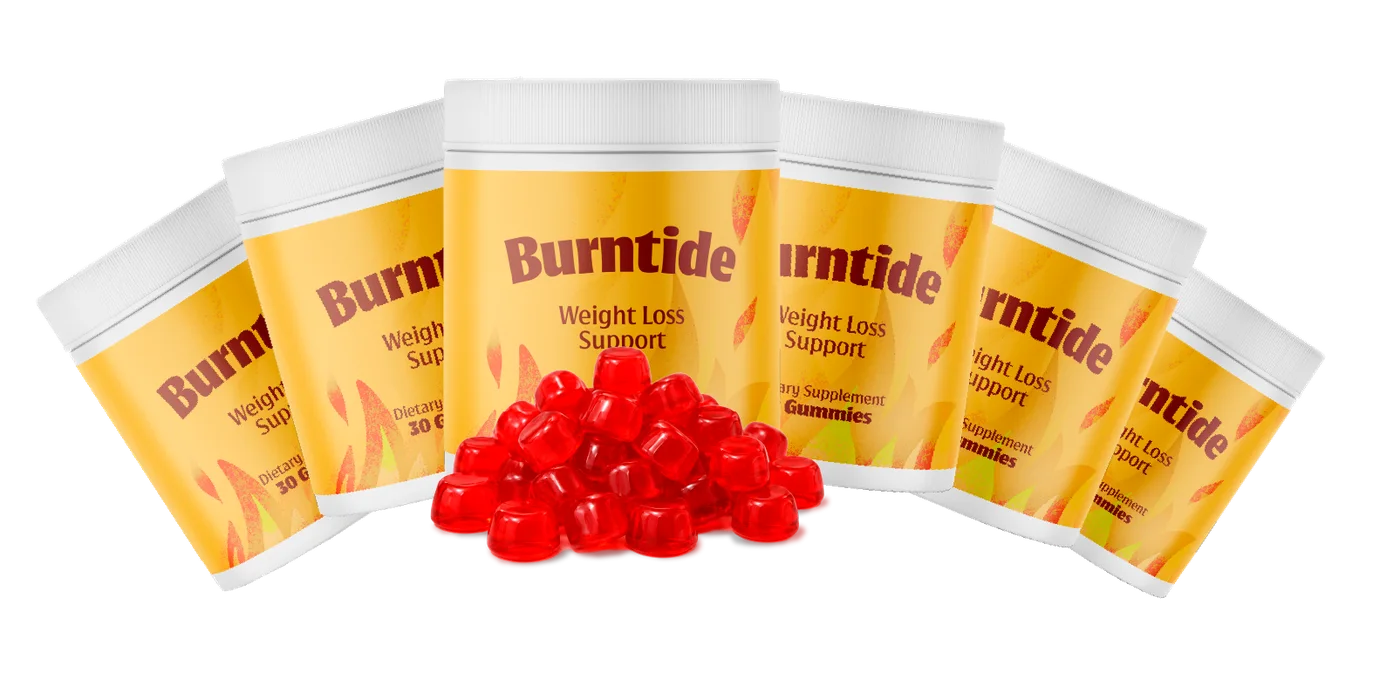
Cost per day, and why it is the only comparable number
Cost per container is meaningless across products, because containers hold different numbers of servings and servings are different sizes. Cost per day fixes both at once. Take the price, divide by the number of days the container covers at the label serving, and you have a figure you can put beside anything.
| Pack | Total | Days at one a day | Cost a day | Cost a year at that rate |
|---|---|---|---|---|
| 1 jar | $89 | 30 | $2.97 | about $1,084 |
| 3 jars | $177 | 90 | $1.97 | about $719 |
| 6 jars | $294 | 180 | $1.63 | about $595 |
That last column is the one people avoid calculating and it is the one that changes minds. A daily supplement is an annual subscription whether or not anybody calls it that, and the difference between the top and bottom rows here is roughly $489 a year for identical gummies.
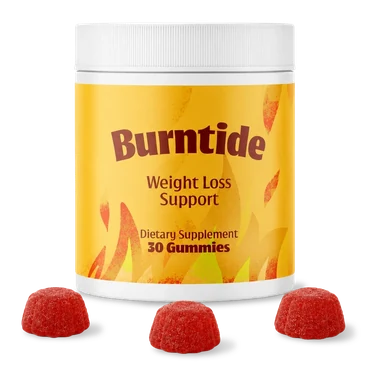
Two caveats on those figures, both of which move them the same direction. Shipping is charged on the one- and three-jar rows and the amount is not published before checkout, so the real cost per day on those two is a little higher. And nobody takes a supplement 365 days a year, so the annual figure is a ceiling rather than a forecast.
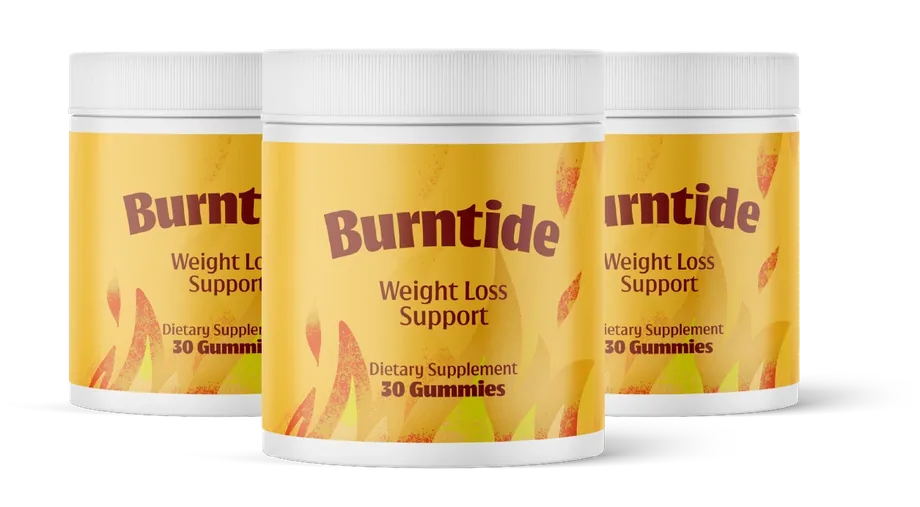
See the Burntide ladder with the arithmetic shown
Three packs, the cost per day for each, and an explanation of what the struck-through prices compare against.
$49 to $89 a jar · 60-day guarantee
Order Burntide On The Official WebsiteCost per refund window
Here is a second number that almost nobody calculates and that is arguably more useful than cost per day. A money-back guarantee defines how much of a purchase you can actually test. Everything beyond it is a bet.
The window here is sixty days from purchase. At one gummy a day that is two jars. So whichever pack you buy, sixty days of Burntide is the same quantity of product, and the only thing that changes is how much unopened stock is sitting in your cupboard when the deadline passes.
| Pack | Paid | Testable inside 60 days | Untested when the window closes |
|---|---|---|---|
| 1 jar | $89 | $89, and you run out on day 30 | $0 |
| 3 jars | $177 | about $118 | about $59 |
| 6 jars | $294 | about $98 | about $196 |
Read the bottom row twice. On the pack the seller recommends, two thirds of the money is committed to product you will not have tried by the time you lose the right to return it. The guarantee still covers the whole order up to day sixty, which is why the practical advice is to decide at week eight rather than drift past it.
None of that makes the six-jar pack a bad buy. It makes it a second purchase. The companion post on pack size walks each row against the deadline day by day.
The cost of being wrong
The third number, and the one that should decide a first order. Assume the product does nothing for you. What did finding that out cost?
- On one jar: $89 plus postage, and you know inside a month.
- On three jars: $177 plus postage, and you have a jar left over unless you return it.
- On six jars: $294, four unopened jars, and a tracked parcel to post at your own cost if you want the money back.
Return postage is the part people forget. It is paid by the buyer on every pack in this category, and posting four jars across the country is not free. That asymmetry is why the cheapest row on a ladder is almost never the cheapest first order.
The published reviews make the point better than any argument. Five of the eight buyers Burntidedaily publishes wrote that they wanted a faster change and stopped at two jars. Two of those five had bought six. Those two people paid $294 to find out something $89 would have told them.
So what is a fair price?
Given all of that, here is the most defensible answer available: a daily metabolism gummy sold direct to consumers, with a published blend total, a sixty-day window, a telephone number and a returns address, sits in a fair range somewhere between one and three dollars a day.
Burntide covers $1.63 to $2.97 depending on the pack, which puts the whole ladder inside that range and the six-jar row near the bottom of it. That is a real assessment rather than a compliment: the ladder is normal for the category and the category is expensive relative to what it delivers, which the NIH Office of Dietary Supplements sets out at length in its review of weight-loss ingredients (the NIH Office of Dietary Supplements).
What would make a gummy worth the top of that range
- Per-ingredient amounts printed, so a buyer could compare it against a trial.
- An independent assay of the batch being sold, with the laboratory named. Testing across the gummy category has found products outside their declared quantities often enough to matter (Cohen 2023).
- Doses inside the range the research used, which for vinegar means tablespoon scale (Kondo 2009) and for ketones means grams rather than milligrams (Yu 2023).
No gummy on the market meets all three, and a gummy that met the third would not be a gummy. That is the trade the format makes, and it is the trade you are buying.
Five questions before you pay
- What does it cost a day? Divide, do not eyeball.
- How much of it can I test inside the refund window? Usually less than you bought.
- What does being wrong cost? That is the number that should pick your first pack.
- Does the price survive without the bonuses? If it only works with $141 of PDFs attached, it does not work. The Federal Trade Commission's guidance on what an advertiser must be able to substantiate is the relevant standard (the FTC on online advertising).
- Is there a telephone number and a returns address? A supplement sold with neither is telling you how a refund will go.
Applied to this product, those five produce one jar at $89 for a first order and six jars at $294 for a second. The pricing page shows the arithmetic, and the buying guide adds the nine non-price checks, two of which this product fails.
Sources cited in this post
- Saldanha LG, Dwyer JT, Bailen RA, et al. Perspectives on the use of proprietary blends in dietary supplements. J Nutr. 2023;153(5):1305-9. PMID 37004873. https://pubmed.ncbi.nlm.nih.gov/37004873/
- Kondo T, Kishi M, Fushimi T, Ugajin S, Kaga T. Vinegar intake reduces body weight, body fat mass, and serum triglyceride levels in obese Japanese subjects. Biosci Biotechnol Biochem. 2009;73(8):1837-43. PMID 19661687. https://pubmed.ncbi.nlm.nih.gov/19661687/
- Yu Q, Wang Z, Li Y, et al. Effects of ketone supplements on blood beta-hydroxybutyrate, glucose and insulin: a systematic review and three-level meta-analysis. Complement Ther Clin Pract. 2023;52:101757. PMID 37327753. https://pubmed.ncbi.nlm.nih.gov/37327753/
- National Institutes of Health, Office of Dietary Supplements. Dietary Supplements for Weight Loss: Fact Sheet for Health Professionals. https://ods.od.nih.gov/factsheets/WeightLoss-HealthProfessional/
- Federal Trade Commission. Online Advertising and Marketing. https://www.ftc.gov/business-guidance/advertising-marketing/online-advertising-marketing
- Cohen PA, Avula B, Wang YH, Katragunta K, Khan I. Quantity of melatonin and CBD in melatonin gummies sold in the US. JAMA. 2023;329(16):1401-2. PMID 37097362. https://pubmed.ncbi.nlm.nih.gov/37097362/

Every page, every journal post, the bottle facts and the ingredients go through review by Dr. Alexis David, MD before they ship. We write from the Burntide label, the Supplement Facts panel photographed on the jar, the pack ladder the official sales page prints, and the distributor’s own paperwork. Sources are linked inline and every one was opened before it was cited. Where a figure is not disclosed we print “not published” rather than estimating it. Corrections go to [email protected] and move the date at the top of this post.